
Meeting someone new online can spark excitement, but it also raises real questions about trust and safety. For single adults in cities across the United States, Canada, the United Kingdom, and beyond, verifying a match’s background has become a practical step rather than a sign of paranoia. With people search tools shaping how relationships begin and develop, you have the power to confirm details, spot red flags, and feel confident before moving forward.
Table of Contents
- Defining People Search And Relationship Impact
- Types Of People Search Tools And Variations
- Identity Verification And Dating Safety Measures
- Legal, Ethical, And Privacy Risks Involved
- Common Mistakes And Responsible Use Guidelines
Key Takeaways
| Point | Details |
|---|---|
| People Search Tools Enhance Safety | These platforms allow users to verify identities, decreasing the risk of catfishing and misrepresentation in dating scenarios. |
| Use Tools Judiciously | Different types of people search tools serve specific purposes; choose one that aligns with your dating safety needs. |
| Combine App Verification and Background Checks | Relying solely on dating app verification is insufficient; use independent searches for a comprehensive safety strategy. |
| Adhere to Legal and Ethical Standards | Understand the boundaries of using personal data responsibly to protect both your privacy and that of others. |
Defining people search and relationship impact
People search tools are online platforms that aggregate public records and personal data to help users find information about individuals. These services compile billions of records from court documents, employment history, property ownership, and contact databases into searchable profiles.
For your dating life, these tools serve a specific purpose: verifying whether someone you met online is who they claim to be. When you’re considering meeting someone from a dating app or social media, a people search can reveal their actual background and confirm basic facts.
What people search tools actually do
A people search engine collects publicly available information and organizes it into readable reports. Here’s what typically gets included:
- Contact details and known addresses (past and present)
- Employment history and workplace information
- Property ownership records and home value estimates
- Criminal records and court filings
- Social media profiles and public associations
- Phone number history and carrier information
You submit a name, email, phone number, or address, and the system cross-references multiple databases to build a profile. Results typically arrive within seconds.
How they impact modern relationships
Research into how technology shapes mate selection reveals that these tools fundamentally change how people evaluate romantic partners before meeting. You’re no longer relying solely on someone’s self-presentation or your instincts.
The impact works in several directions:
Safety and verification. You can confirm someone’s identity before exchanging personal details or meeting in person. This reduces vulnerability to catfishing, romance scams, and misrepresentation.

Decision-making confidence. Knowing someone’s background helps you make informed choices about whether to continue talking to them. You’re not operating on incomplete information.
Relationship trust foundation. Starting with verified facts, rather than assumptions, can reduce misunderstandings early on. You already know certain things are true.
Changed expectations. Partners now expect some level of background checking as normal. This isn’t about being paranoid; it’s practical due diligence.
People search tools shift relationship formation from pure chance meetings to informed selection, changing how singles evaluate compatibility and trust from the very first connection.
The reality is straightforward: if someone is unwilling to be found through a basic search, that’s worth investigating further. Legitimate people have traceable backgrounds.
Pro tip: Start with a free search to see what information is publicly available about your match before committing time to conversations; this takes two minutes and prevents wasted emotional energy on inauthentic connections.
Types of people search tools and variations
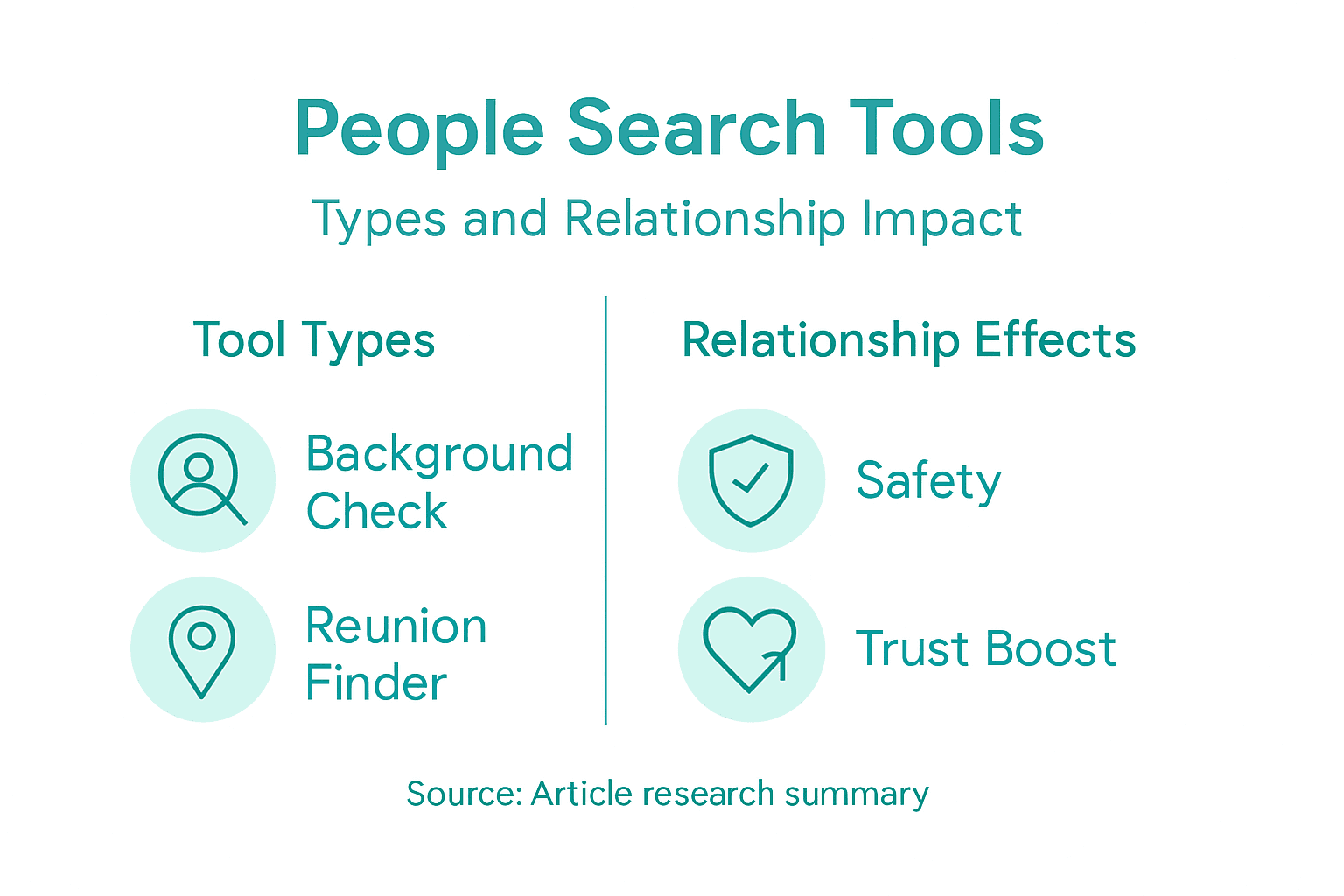
Not all people search tools work the same way. Some focus on background checks, others specialize in locating old friends, and some provide specialized data for specific purposes. Understanding the differences helps you choose the right tool for your dating safety needs.
Mainstream consumer search platforms
These are the household names you’ve probably heard about. They’re designed for everyday people looking to verify someone’s background or find contact information.
Consumer platforms typically offer:
- Broad data aggregation from public records
- Fast, easy-to-use search interfaces
- Affordable pricing with free and premium options
- Multiple search methods (name, phone, email, address)
- Detailed background reports with criminal history
These tools pull from billions of public records and are built specifically for speed and user-friendliness. You don’t need technical skills to get results.
Professional and niche variations
Comparison of research networking tools reveals how different platforms emphasize different data sources and features depending on their purpose. Professional versions prioritize employment history, education verification, and credential checking.
Niche variations include:
- Employment screening tools. Verify job history and professional background.
- Social media aggregators. Compile public profiles across platforms.
- Skip tracers. Locate people who are harder to find.
- Academic and professional databases. Focus on credentials and qualifications.
For dating, you probably want a consumer platform, not a professional screening tool. They’re faster, cheaper, and designed for your use case.
Here’s how the main types of people search tools compare for dating safety needs:
| Search Tool Type | Best For | Data Focus | Cost Level |
|---|---|---|---|
| Consumer platform | Quick verification | Broad public records | Low to moderate |
| Employment checker | Career validation | Work history, credentials | Moderate to high |
| Social media aggregator | Digital presence | Public profiles, associations | Low |
| Skip tracer | Hard-to-find contacts | Address history, aliases | Moderate |
| Academic database | Credibility check | Education and research | Varies |
Free versus premium tiers
Most people search tools offer both options. Free searches show basic information: does this person exist, what’s their approximate age, do they have a criminal record.
Premium searches reveal:
- Complete contact history
- Property ownership details
- Detailed criminal and civil court records
- Social media connections
- Relatives and known associates
- Historical addresses and phone numbers
For dating verification, a free search usually answers your core question: “Is this person real and are there major red flags?” You can upgrade if you need deeper details.
Different tools serve different purposes, but for dating safety, you need one designed for consumer background checking, not professional vetting or academic research.
The variation in tools means you have options. Some platforms are faster, others cheaper, and some offer unique data combinations. The key is finding one that matches your specific verification needs.
Pro tip: Compare results across two different platforms for the same person; sometimes one tool catches information the other misses, giving you a more complete picture before deciding whether to meet.
Identity verification and dating safety measures
Identity verification on dating apps remains incomplete. Most platforms rely on basic photo uploads, but that’s insufficient for protecting yourself. You need a multi-layered approach combining app features with independent background checks.
How dating apps verify identity
Dating platforms use several verification methods, though they vary widely. Most require a phone number or email, some use photo verification, and a few conduct basic background checks.
Common verification approaches include:
- Phone number confirmation via text or call
- Email address verification
- Photo verification (comparing selfies to profile pictures)
- Social media account linking
- ID document uploads (limited availability)
However, identity verification design limitations on dating platforms mean these protections have significant gaps. A verified profile doesn’t guarantee someone is truthful about their background, intentions, or personal details.
What dating app verification misses
App-based verification answers one question: “Is this person’s phone number real?” It doesn’t answer the questions that actually matter for your safety.
Verification won’t reveal:
- Whether someone has a criminal history
- If they’re married or in a relationship
- Whether they’ve been accused of assault or harassment
- Prior incidents reported by other dating app users
- Employment and financial status claims
- Whether they’re using a fake name
This is where people search tools complement dating app features. They access public records that dating apps don’t check or won’t share.
Your verification checklist
Take responsibility for your own safety. Don’t rely solely on the app’s verification.
- Run a people search using their name, email, or phone number.
- Cross-reference social media to confirm photos and employment claims match.
- Check for consistency across their dating profile, social media, and public records.
- Look for red flags like missing addresses, employment gaps, or name changes without explanation.
- Search their phone number independently to verify contact history.
- Ask direct questions and verify answers against what you find.
The most effective safety approach combines app verification with independent background research; one alone leaves dangerous gaps.
You’re not being paranoid. You’re being smart. Real people have traceable backgrounds that match their stories.
Common verification mistakes
People often skip steps that would catch problems early. They trust an app’s blue checkmark or believe someone because they seem nice in messages.
Avoid these pitfalls:
- Assuming verified profile means thoroughly vetted person
- Trusting profile claims without independent confirmation
- Skipping research because you like their messages
- Overlooking inconsistencies between their stories and public records
- Meeting someone without completing basic background research
Don’t rush. The right person will have a verifiable background that checks out.
Pro tip: Complete your people search before your first message exchange, not after weeks of chatting; catching problems early saves emotional energy and protects you from potential deception.
Legal, ethical, and privacy risks involved
Using people search tools comes with real legal and ethical considerations. While searching public records is legal, how you use the information matters significantly. Understanding these boundaries protects you legally and ethically.
Legal frameworks governing people search
People search tools operate within existing data protection laws. In the United States, the Fair Credit Reporting Act (FCRA) governs how consumer report information can be used. In Europe, the General Data Protection Regulation (GDPR) restricts how personal data is collected and used.
Key legal points:
- Public records are legally accessible but have usage restrictions
- Using information for harassment, stalking, or discrimination is illegal
- Sharing someone’s personal information without consent may violate privacy laws
- Some states have additional restrictions on how background information can be used
- Employment screening has stricter rules than personal use
Privacy rights and data protection frameworks establish that accessing personal data carries ethical obligations. Just because information is publicly available doesn’t mean all uses are legally permissible.
What you legally can and cannot do
For dating purposes, you can legally search someone’s background to verify their identity and assess safety. You cannot legally use that information to stalk, harass, discriminate, or share publicly without consent.
Legal uses of people search:
- Verifying identity before meeting
- Checking for criminal history affecting your safety
- Confirming employment or relationship status claims
- Assessing whether someone is being truthful
Illegal or unethical uses:
- Sharing their background report with others
- Using information to blackmail or threaten them
- Posting their personal details online
- Using it as justification for harassment
- Sharing the report on social media or with friends
The distinction is simple: personal verification for your safety is legal. Using information to harm, embarrass, or expose someone is not.
Privacy and consent concerns
Data controller responsibilities and GDPR compliance outline how organizations handling personal data must protect individuals’ rights. When you access someone’s information through a people search tool, you’re viewing data collected about them without their knowledge.
This creates an asymmetry. They don’t know you’re researching them. That’s why using the information responsibly matters.
Just because information is public doesn’t make all uses of it ethical or legal; the purpose and intent behind your search determines whether you’re protecting yourself or violating someone’s privacy.
Consider what you’d want if the situation were reversed. Would you want someone researching your background before deciding whether to meet you? Probably yes. Would you want them sharing your report publicly? Absolutely not.
Protecting yourself legally
Keep your search private. Don’t share results with friends, post them online, or mention them unless safety genuinely requires disclosure.
Safety boundaries:
- Keep search results confidential
- Use information only for personal safety decisions
- Don’t weaponize findings to embarrass or harm someone
- If something concerning emerges, report it to authorities rather than taking matters into your own hands
You’re allowed to protect yourself. You’re not allowed to punish someone for what you find.
Pro tip: Document your search results privately for your own records, but never share them with the person you searched or post them publicly; maintaining confidentiality protects you legally and demonstrates you’re using the tool responsibly.
Common mistakes and responsible use guidelines
People search tools are powerful, but using them poorly undermines their value and creates problems. Most mistakes stem from unclear goals, poor search strategy, or misusing the information you find.
Mistakes in how you search
Your search quality determines your results. Many people conduct searches that are too vague or rely on incomplete information, wasting time and returning unhelpful results.
Common search mistakes:
- Using only a first name without additional identifiers
- Searching with outdated or partial contact information
- Assuming one search result is definitive without verification
- Not trying multiple search methods (name, phone, email, address)
- Giving up after one failed search attempt
Poor search strategies and disorganized data management waste time and reduce accuracy. You’ll get better results with a methodical approach than random attempts.
Here are common mistakes and improved alternatives for people search use:
| Common Mistake | Why It’s Risky | Better Approach |
|---|---|---|
| Searching minimal info | Low accuracy, misleading results | Use full name, city, and all known details |
| Trusting one source | Can miss key data | Check multiple platforms for verification |
| Overreacting to old issues | Unfair judgment | Weigh recency and context carefully |
| Sharing results openly | Privacy violation risk | Keep all findings confidential and private |
Better search approach:
- Start with their full name and city
- If that yields nothing, try their phone number or email
- Cross-reference results across different platforms
- Verify findings with additional sources
Mistakes in how you interpret results
Finding information is only half the battle. How you interpret and use it matters equally. Many people make snap judgments based on incomplete data.
Common interpretation mistakes:
- Assuming one arrest means guilt without understanding the outcome
- Reading name matches without confirming they’re the right person
- Over-weighting old information that may no longer be relevant
- Missing context about name changes, relocations, or life transitions
- Drawing conclusions without checking multiple sources
Confirmation bias and methodological flaws mean you see what you’re looking for, not what’s actually there. If you’re searching someone hoping to find problems, you’ll interpret ambiguous information negatively.
Interpret results fairly. A 15-year-old arrest with no recent activity is different from recent criminal charges. A name match for a common name requires verification it’s actually the same person.
Mistakes in how you use the information
Once you have information, what you do with it determines whether you’re using the tool responsibly. Many people share results, weaponize findings, or make decisions based on incomplete data.
Avoid these misuses:
- Sharing someone’s report with friends or posting online
- Making final decisions without meeting the person
- Holding old information against someone indefinitely
- Using findings to blackmail or threaten them
- Assuming worst-case interpretations without verification
The difference between responsible use and abuse lies not in accessing information, but in how you interpret it and what you do with it afterward.
Your goal is personal safety, not punishment or exposure. If information raises concerns, discuss them directly with the person or end the connection quietly. Don’t broadcast what you found.
Responsible use framework
Approach people searches with clear intention. You’re verifying identity and assessing safety, not building a case against someone.
Responsible use requires:
- Clear purpose: Know why you’re searching before you start
- Verification: Confirm findings with multiple sources
- Fairness: Interpret results objectively, not through bias
- Confidentiality: Keep results private and secure
- Proportionality: Don’t overreact to information taken out of context
Treat people search information the way you’d want yours treated. Use it to make informed decisions about your safety, then move forward.
Pro tip: Document what you searched and when you searched it, but focus your attention on clear red flags rather than minor inconsistencies; getting lost in details wastes time and clouds your judgment.
Secure Your Relationships with Trusted People Search Solutions
Navigating modern relationships means more than just trust and good instincts. As the article highlights, the challenge lies in verifying identity and uncovering critical background details before investing your time and emotions. If you want to avoid the risks of misrepresentation or catfishing, you need a reliable way to confirm facts such as criminal history, employment verification, and contact information.
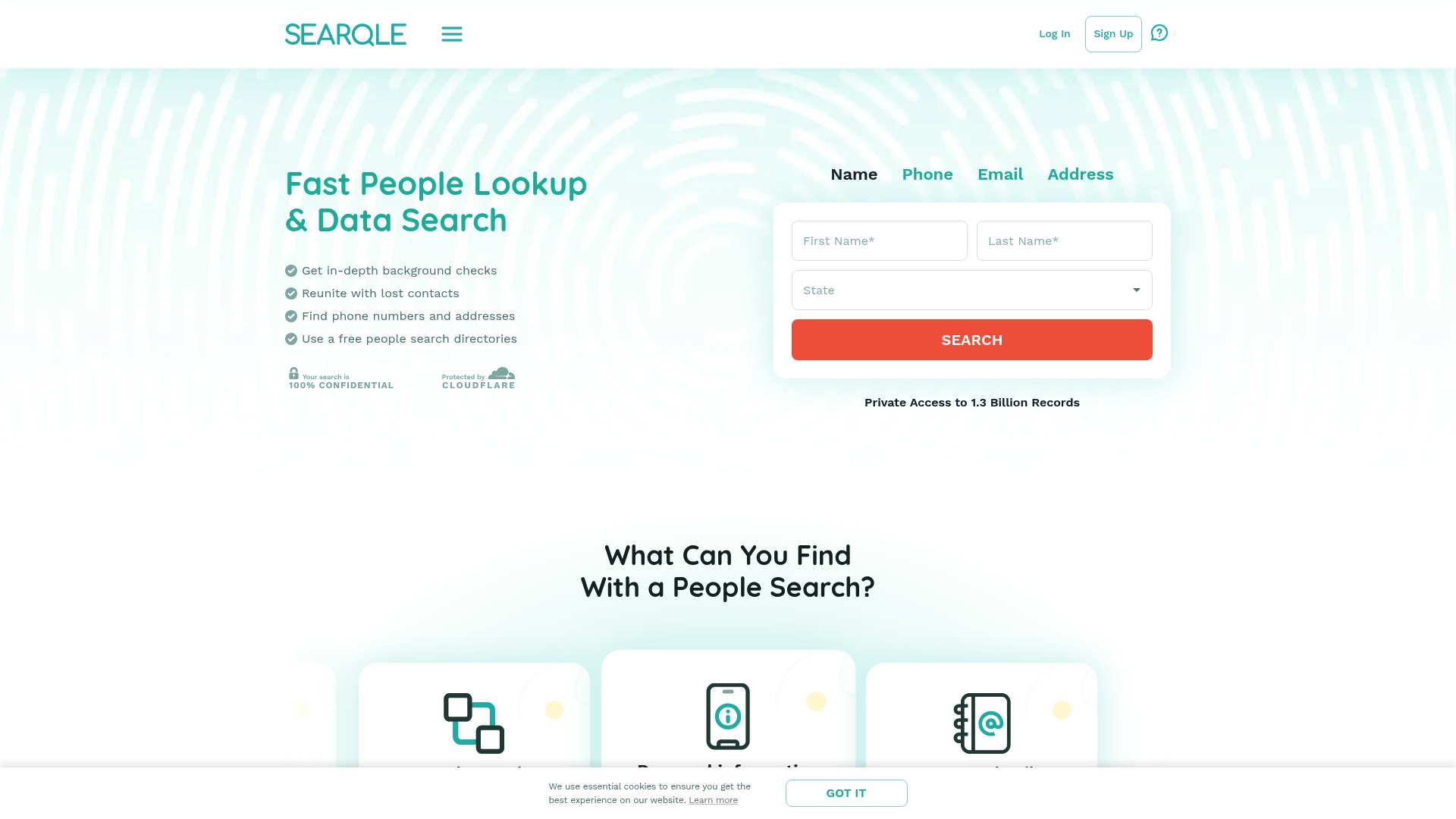
Start protecting yourself today with Searqle, a user-friendly people search platform designed for exactly these needs. With access to over a billion public records including court cases, property ownership, and phone number history, Searqle gives you the power to make informed decisions before your first message or meeting. Don’t let uncertainties derail your dating life. Take control now by running a free search on Searqle.io and discover why informed verification is the cornerstone of safe, confident relationship building.
Frequently Asked Questions
What are people search tools and how do they work?
People search tools are online platforms that aggregate public records and personal data to help users find information about individuals. They compile data from various sources like court documents, employment records, and property ownership into searchable profiles.
How can people search tools impact my dating life?
These tools can verify whether someone you met online is who they claim to be, reducing the risk of catfishing and misrepresentation. They can help confirm basic facts about a potential partner, aiding in informed decision-making and building a foundation of trust.
What information can I find using people search tools?
Typically, you can find contact details, known addresses, employment history, criminal records, and social media profiles. This comprehensive data helps you assess someone’s background before deciding to meet them.
Are free people search tools effective for dating safety?
Free people search tools can provide basic information and help you quickly determine if someone is legitimate and if there are any major red flags. However, premium searches often offer deeper insights, such as complete contact histories and detailed criminal records.
Recommended
- People Search Engine — Find a Person by Name Across the USA — Searqle
- BeenVerified vs TruthFinder: Which Tool Is Better for You?
- Spokeo vs TruthFinder: Which Tool Is Better for You?
- Intelius vs TruthFinder: Which Tool Is Better for You?


