

Last update: 01/21/2026
Whitepages and TruthFinder are on everyone’s lips, but which people search website should you trust? We’ve tested and compared both to help you decide. Read on to discover the differences in features, pricing, and accuracy.
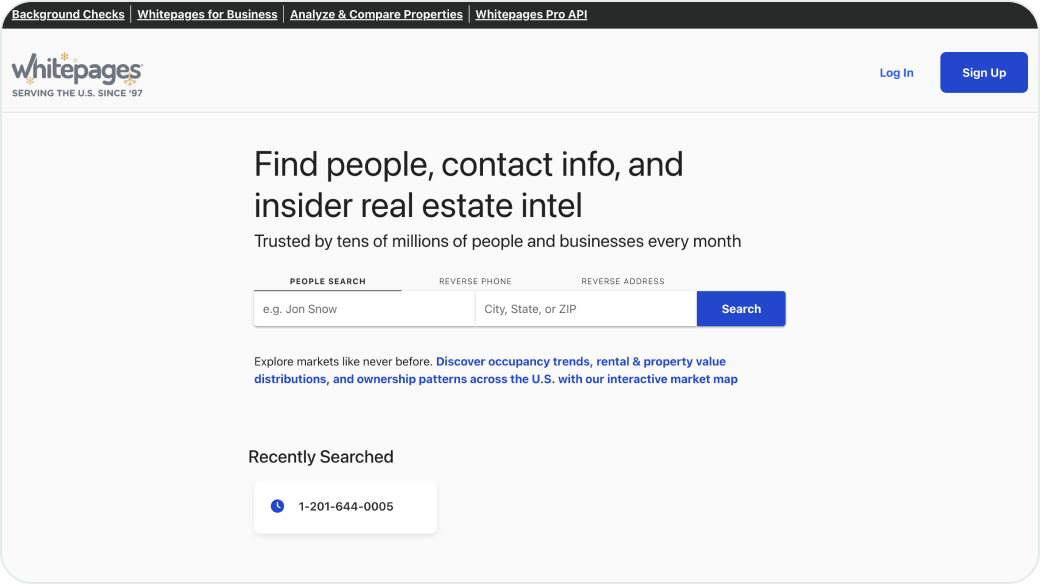

Whitepages
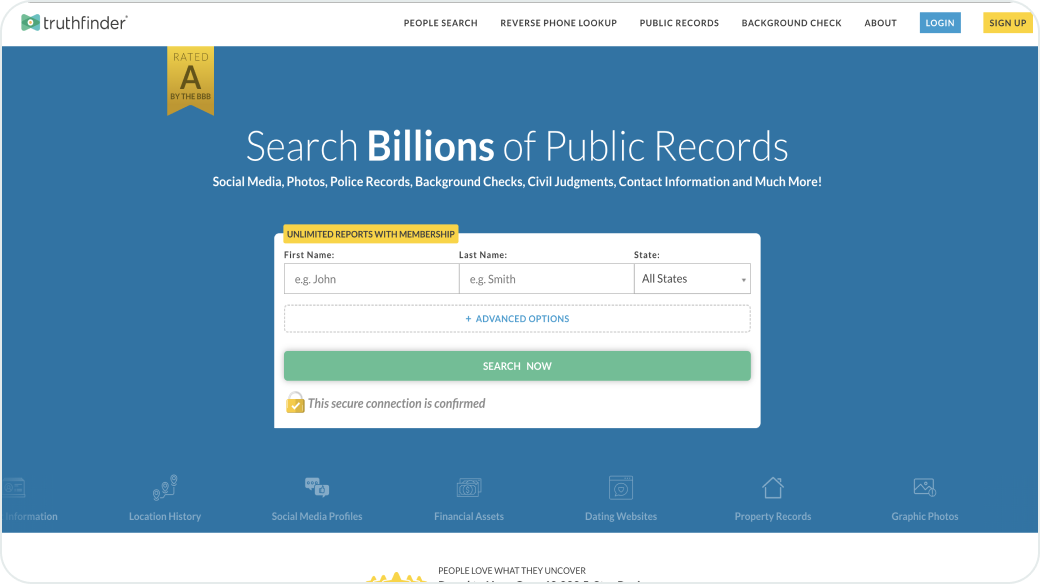

TruthFinder
Searqle is the people search alternative you were looking for.
Try it for instant results!

Whitepages
TruthFinder
WhitePages is the oldest people search service, founded in 1997. Back then, it was a phone directory website, which has since expanded to offer people search, background check, and identity verification services. It fits both casual users looking for basic contact information and business users who require advanced search and background check services.
Since its founding in March 2015, TruthFinder has provided a service for searching public records online. The platform specializes in producing detailed background reports, but it also has the capability to perform reverse lookups using a name, phone number, or email address to find basic information. It is best suited for individuals who need access to comprehensive data on someone, including their address history, contact information, criminal background, and social media footprint.
Key Features
- Free lookups provide basic information: full name, age, general location, and landline numbers - Free mobile apps focus on caller ID and spam protection - Premium features include in-depth background checks - FCRA-compliant screening for tenants and employees
- Extensive background checks - Access to criminal, arrest, and traffic violation records - A people search function using name and a known location - Reverse phone number lookup service - A scan of the dark web to check for data breaches
User Experience
The site loads quickly, and free results come in almost instantly. As for paid details, they might take a while to load because of the amount of information being gathered. Reports are clean, detailed, and usually data-rich.
TruthFinder's website is straightforward and user-friendly, which makes initiating a background check simple. Once you provide the initial search criteria, the system presents you with questions to refine the search and eliminate irrelevant individuals. While basic results are viewable at no cost, the full reports containing detailed information on residential history, family, education, and career are behind a paywall.
Pricing and Plans
- One-time report costs around $10 - Trial is available at $1 for 5 days - All-Access Plan comes at $20 per month, as does Premium Business Plus
The service is exclusively subscription-based. The monthly plan is priced at approximately $28.05 and is billed on a bi-monthly basis. Users can conduct basic searches for free.
Pros
- Well-known, reputable service with a long history - Free basic information - Business services are available
- Reports compile data from federal, state, and county records for a complete picture - Access to some preliminary details without any charge - The dark web scan feature adds a layer of personal data security
Cons
- Limited number of reports in long-term plans - Free information lacks depth - Accessing detailed criminal or financial history may incur an additional fee
- The search process can be noticeably slow - You cannot purchase reports on an individual basis - Its operations are confined to the U.S.
Conclusion
Good for quick, free searches. Those looking for in-depth information might want to weigh several options. WhitePages charges per report, which might be pricey for casual users, though for business needs, it might be worth trying out.
TruthFinder is the ideal platform for users who require frequent, in-depth background checks and are patient enough to wait for the searches to complete. It's important to remember that the service is intended for personal inquiry only, as it does not adhere to the Fair Credit Reporting Act (FCRA) and cannot be used for employment or tenant screening.
Got more questions about Whitepages and TruthFinder?
We see Whitepages as a reliable directory service that’s great for finding contact information, quick lookups, and basic identity verification. TruthFinder, however, is designed for more in-depth background checks, offering details like full address history, criminal records, and even alerts about activity on the dark web. When comparing the two, Whitepages is a better choice if you’re just looking to confirm something simple, like a phone number or address. On the other hand, TruthFinder is the way to go if you need a more thorough and detailed report. Whitepages is straightforward and faster to use, while TruthFinder provides a deeper dive into someone's background.
We've noticed that Whitepages is really good at giving us accurate contact details, like phone numbers and home addresses. On the other hand, TruthFinder seems more accurate when we're trying to find older or background information because it looks at a wider variety of sources. When you put them next to each other, Whitepages comes out on top for how precise its directory information is, while TruthFinder is better for detailed record accuracy. Each one is excellent in its own way. So, how accurate they are really depends on what kind of information we're trying to check.
Whitepages lets us get more free information right from the start, particularly for simple phone number and address searches. TruthFinder usually asks for money before it shows you any helpful specifics. Side by side, Whitepages definitely provides a better free experience, while TruthFinder keeps almost everything hidden unless you pay. This makes Whitepages a better choice for quick checks that don't cost anything. TruthFinder, on the other hand, still needs a paid membership to be truly useful.
Yes, both services are trustworthy and used by many people. Whitepages is well-known for its directory listings, while TruthFinder focuses on detailed background checks. In terms of safety, both are reliable as long as you use them responsibly and follow the law. Which one you choose depends on what you’re looking for, but both are safe options for personal research.
Whitepages is generally easier to cancel because its subscription setup is more straightforward. TruthFinder also lets you cancel, but depending on your specific plan, it might ask for a little more confirmation. Comparing the two, Whitepages typically provides a faster and more direct cancellation process. TruthFinder still handles cancellations fine, it just often includes an extra step or two. So, Whitepages offers a simpler cancellation experience overall.
Both platforms allow data removal, but Whitepages provides a clearer and quicker opt-out path. TruthFinder also processes removals, but because it collects deeper records, the process may take longer or require follow-up. Whitepages feels smoother and more user-friendly. So for fast opt-outs, Whitepages is the better option.
Still deciding between the two?
Searqle is the alternative you’ve been missing. Find anyone by number, run background checks, and protect yourself from data leaks. Do it all on one reliable people search website.
START YOUR SEARCH


